What Actually Happens at a Boudoir Session? A Step‑by‑Step Walkthrough
TL;DR
- A boudoir session is a private, guided photoshoot shaped around your comfort, goals and boundaries.
- With Karen Stauffer, you do not need to know how to pose or “be sexy” on command, she fully guides every pose and handles flattering light for you.
- From the first conversation to seeing your images, you stay in charge of what feels right for your body and your story.
You are probably here because the idea of boudoir feels both exciting and a little terrifying. You are curious, but you also hear that voice in your head listing every “flaw” and every reason you are not a model.
You might be over 40, in the middle of a big life shift, or just tired of feeling disconnected from your body. Before you even think about booking, you want to know exactly what happens at a boudoir session, not just vague promises.
This walkthrough is written for you. Step by step, you will see what actually happens in a session with Karen Stauffer Photography, how your comfort is protected, and how a guided process can turn first-time nerves into something genuinely confidence-building.
What actually happens at a boudoir session? (Quick overview)?
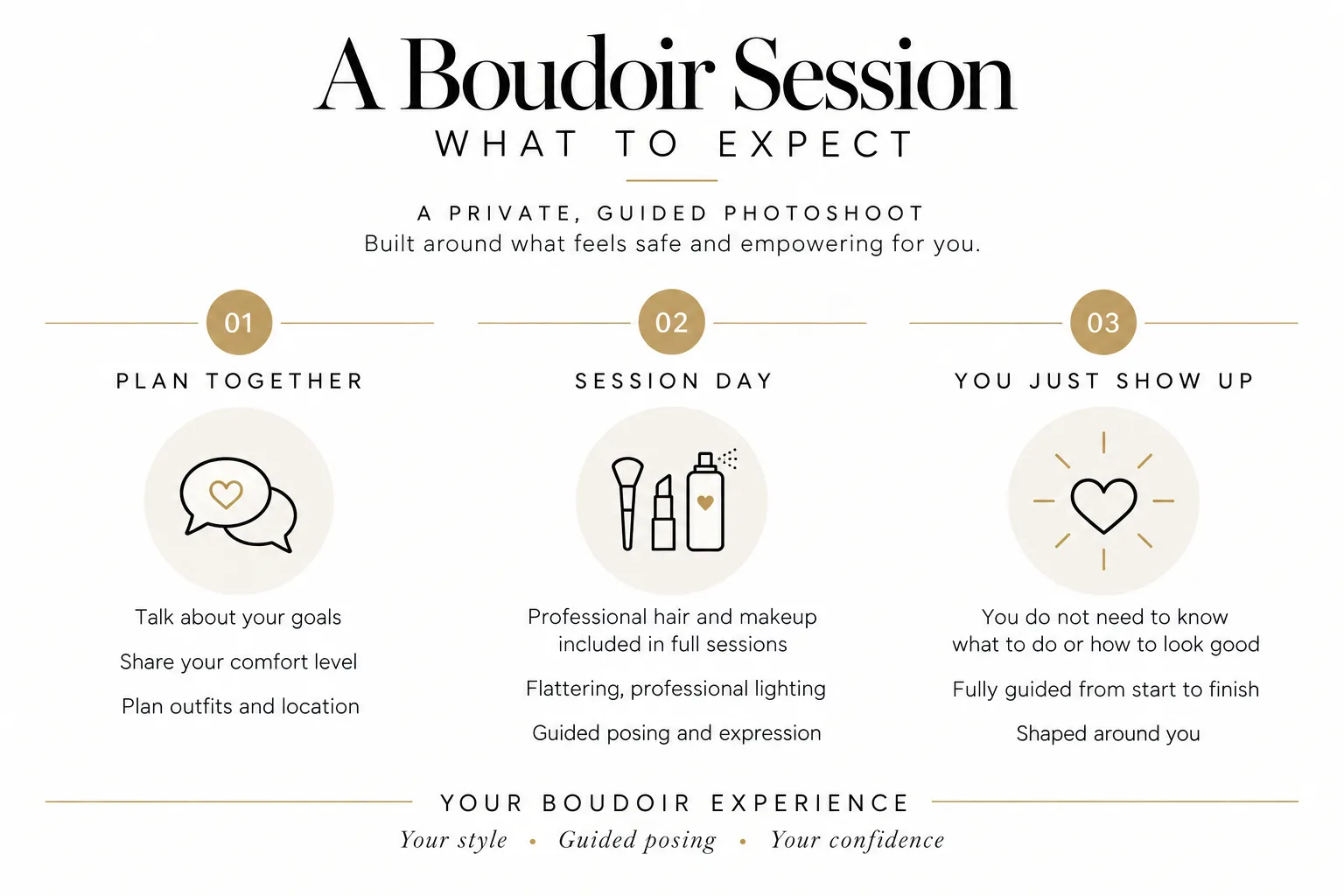
A boudoir session with Karen Stauffer Photography is a private, guided photoshoot built around what feels safe and empowering for you. It starts with a conversation about your goals and comfort level, moves into planning outfits and location, then a session day where professional hair, makeup and lighting are included in full sessions, and Karen guides every pose and expression so you are never left guessing.
Karen positions her sessions as fully guided, with posing and flattering light handled by the photographer, not the client, so you do not have to arrive knowing what to do or how to “look good” for the camera. You show up as you are, and the process is shaped around you.
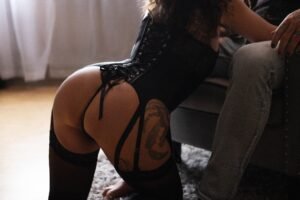
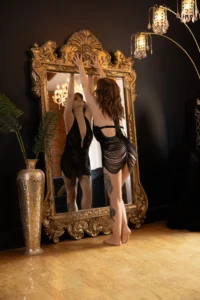
If you want to see how this guided approach shows up in her work, you can look through Karen’s boudoir portfolio after you read, but you do not need to look or be like anyone in those images to belong in front of the camera.
Step 1: The first conversation and booking
Before anything is officially booked, there is a conversation. That might happen over email, a phone call or messages, depending on what feels easiest for you.
In this first exchange, you can share:
- Why boudoir has been on your mind.
- What you hope to get out of the experience, for yourself or for a partner.
- Any worries you have about your body, age, scars, weight or past experiences.
- Clear boundaries around nudity, poses or topics that feel off-limits.
You can also ask very practical questions, like:
- “What should I wear if I hate my stomach?”
- “Can we avoid anything that shows my arms?”
- “Is this more moody and intimate, or light and playful?”
This is not an interview where you need to “sell” yourself or be confident. It is a chance to be completely honest so the session can be designed around you.
A client-centered boudoir process includes checking in with the client and pausing when needed during the shoot, which is supported by guidance on client-centered boudoir photography. That starts here, with you knowing you can say “I’m nervous about that” and have it heard and respected.
Once you feel your questions are answered and the overall fit feels right, you can choose a date and officially book.
Step 2: Planning your session (outfits, comfort level, and logistics)
After you book, the focus shifts to planning. This is where a lot of your “what do I even wear?” worries get answered.
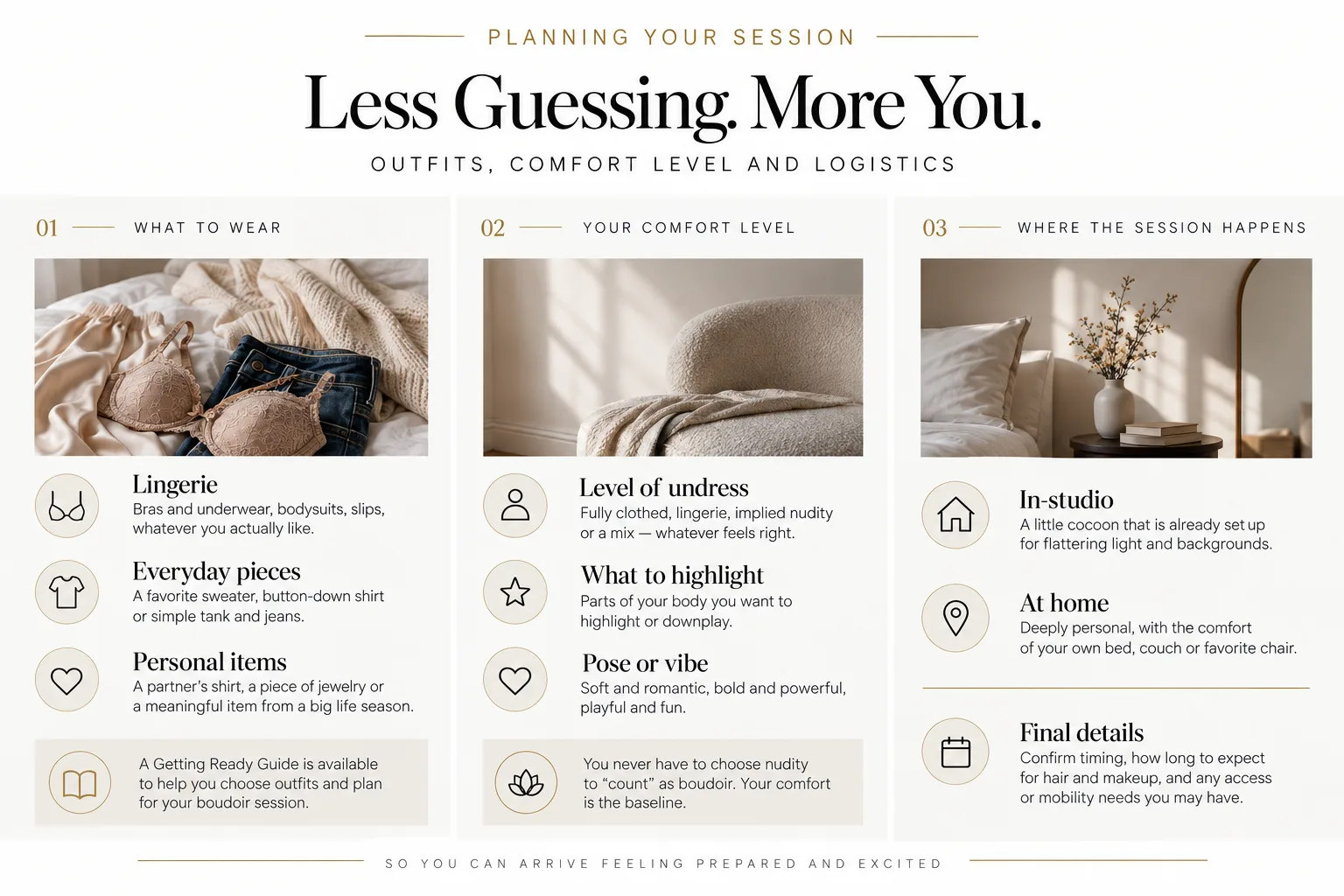
Planning usually covers three main areas:
- What to wear
Together you talk through:
- Lingerie (bras and underwear, bodysuits, slips, whatever you actually like).
- Everyday pieces, like a favorite sweater, button-down shirt or simple tank and jeans.
- Personal items, such as a partner’s shirt, a piece of jewelry or a meaningful item from a big life season.
Karen offers a Getting Ready Guide to help clients choose outfits and plan for their boudoir session. This guide gives you ideas and practical tips, so you are not left staring at your closet in a panic.
- Your comfort level and level of undress
Planning also includes talking about:
- What level of undress feels right: fully clothed, lingerie, implied nudity, or a mix.
- Parts of your body you want to highlight or downplay.
- Poses or vibes you are drawn to (soft and romantic, bold and powerful, playful and fun).
You never have to choose nudity to “count” as boudoir. Your comfort is the baseline.
- Where the session will happen
Karen Stauffer has a photography studio, and she can also photograph at the customer’s home. During planning you decide which option fits you better.
- In-studio can feel like stepping into a little cocoon that is already set up for flattering light and backgrounds.
- At home can feel deeply personal, with the comfort of your own bed, couch or favorite chair.
You will also confirm timing, how long to expect for hair and makeup, and any access or mobility needs you may have. The goal is that by the time your session day arrives, there are no big unknowns left.
If you are wondering about traveling from nearby cities, there is more about that in this guide for women traveling for boudoir in Central Illinois.
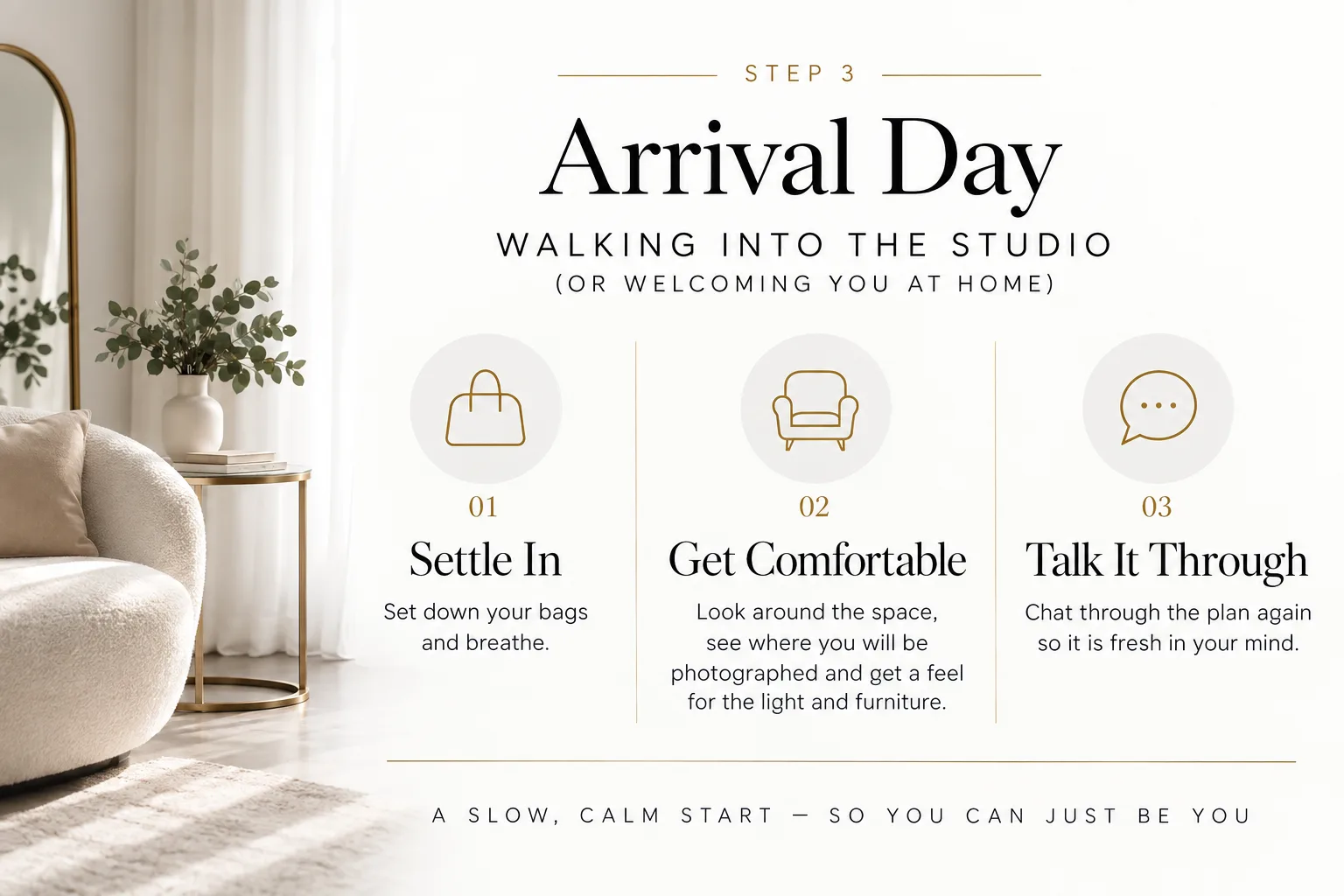
Step 3: Arrival day – walking into the studio (or welcoming you at home)
Session day arrives, and your main job is to show up. Easier said than done when nerves are high, which is why the very beginning of the day is kept slow and calm.
Whether you walk into Karen’s studio or she arrives at your home, there is time to:
- Set down your bags and breathe.
- Look around the space, see where you will be photographed and get a feel for the light and furniture.
- Chat through the plan again so it is fresh in your mind.
Nothing starts the second you walk in. You get a few minutes to just be a person, not “a client”.
A client-centered boudoir process includes watching for nonverbal discomfort and pausing when needed, a best practice described in this article on client-centered boudoir. Karen carries that into your arrival too. If your body language is saying “I am overwhelmed”, she pays attention to that.
You can expect to review:
- The outfits you brought and the order you might use them.
- Any last-minute questions or boundary changes.
- How breaks will work, and how to signal if you need one.
If the session is at your home, there will also be a quick look around to find the best light and decide where to shoot (for example, your bedroom versus your living room).
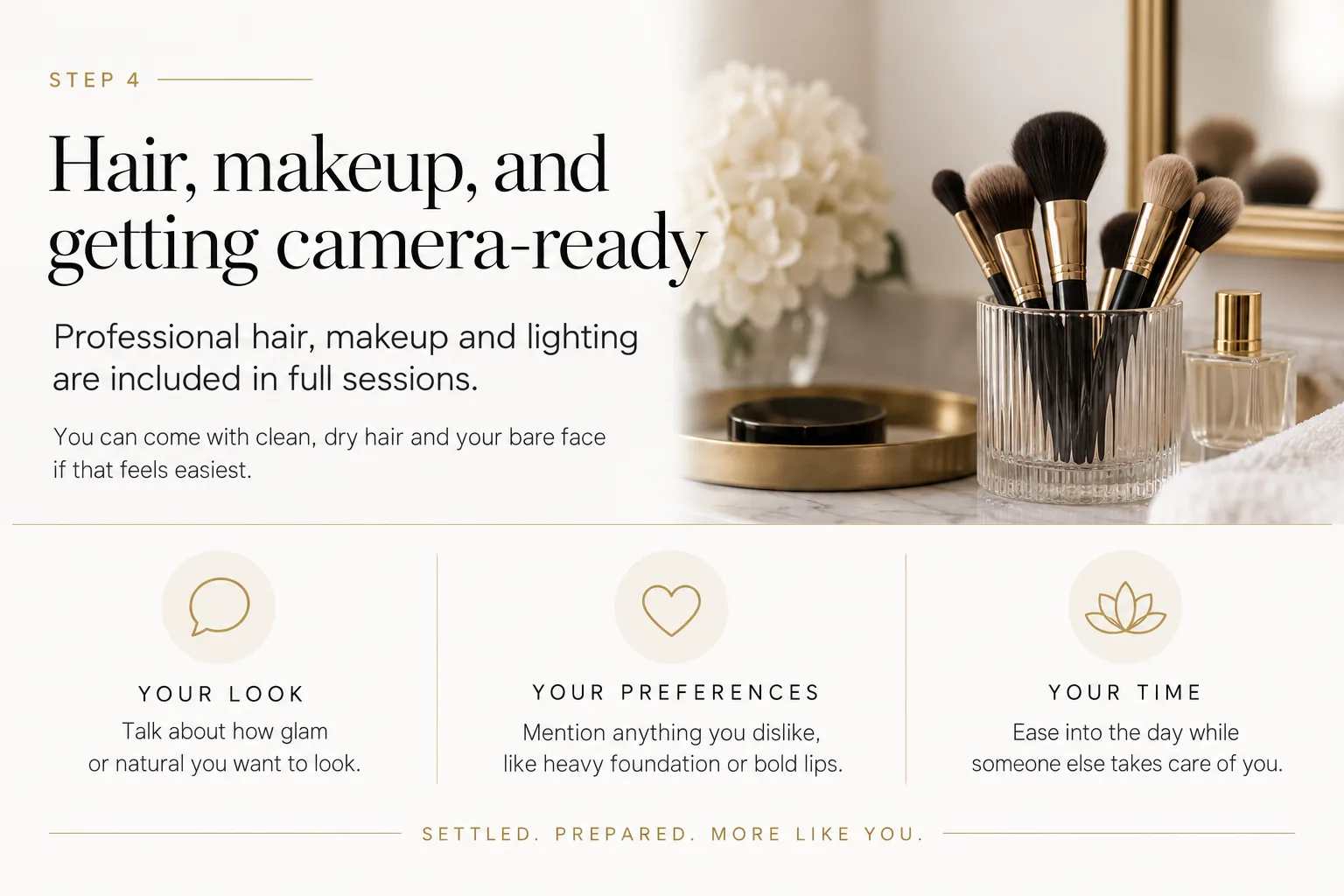
Step 4: Hair, makeup, and getting camera-ready
Once you are settled, it is time to get camera-ready.
Many full boudoir sessions include professional hair and makeup, so you do not have to arrive fully styled or know how to do a camera-ready look on your own. With Karen Stauffer Photography, professional hair, makeup and lighting are included in full sessions. You can come with clean, dry hair and your bare face if that feels easiest.
During hair and makeup you can:
- Talk about how glam or natural you want to look.
- Mention anything you dislike, like heavy foundation or bold lips.
- Ease into the day while someone else takes care of you.
This is often when nerves start to soften. You are not in front of the camera yet. You are just sitting, breathing and being taken care of.
Karen’s approach to fully guided sessions, including professional preparation and flattering lighting, is described in more detail in her legacy session philosophy. The same care applies to boudoir.
By the time hair and makeup are finished, you have had time to adjust to the space, ask more questions and start feeling more like the version of you who was brave enough to book this.
Step 5: During the shoot – posing, direction, and checking in
This is the part most women worry about: “What happens once the camera comes out? What if I freeze? What if I do it wrong?”
Here is the honest answer: you are not expected to know what to do.
During boudoir sessions with Karen:
- Karen guides every pose and expression.
- She believes posing and flattering light are the photographer’s job, not the client’s.
- You are told exactly where to place your hands, how to angle your chin, when to breathe and soften, and when to lean into more strength or softness.
You might hear directions like:
- “Sit on the edge of the bed, right there. Drop your right shoulder, bring your chin slightly toward me, eyes down to your hand.”
- “Take a deep breath, exhale slowly and think about a moment you felt really proud of yourself.”
- “Let your knee fall just a bit, perfect, stay there.”
You are never asked to “be sexy” in a vague way. You are guided into poses that are chosen for your body, your comfort level and your goals.
Throughout the shoot:
- A client-centered boudoir process includes watching for nonverbal discomfort, pausing when needed and checking in during the shoot, as described in this client-centered boudoir resource.
- Karen notices if your shoulders creep up, your breath gets shallow, or your eyes start to glaze, and she will pause for a break or adjust the pose.
- You are encouraged to speak up if anything feels off, even if you cannot explain why.
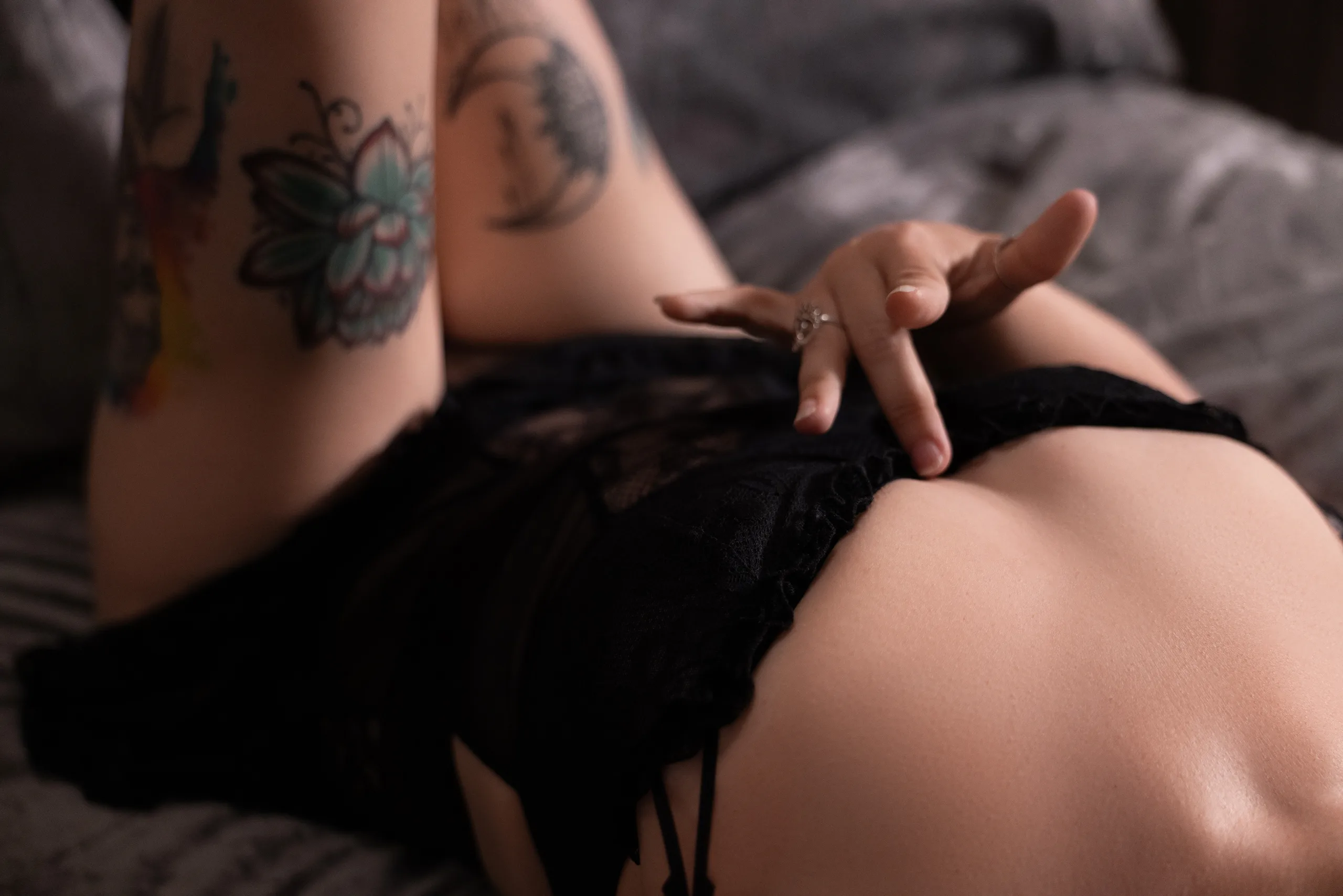
You will change outfits a few times, shift between different parts of the room or home, and move through a range of expressions from soft to fierce, depending on what fits you.
If you are self-conscious about a particular area, that is folded into posing and angles. Posing is used to highlight what you love and gently support what you are less sure about, without you needing to know how that works.
You can expect:
- Built-in breaks to sit, drink water and breathe.
- Gentle encouragement, not pressure, if you want to try something a bit bolder.
- The option to stop, change or skip poses that do not feel right.
You do not have to hold a single “perfect” performance the whole time. You are guided, supported and checked in with from start to finish.
Step 6: After the shoot – viewing, choosing, and products
When the last pose is done and you are back in your regular clothes, the energy shifts again. You have done the scary thing. Now what?
After a boudoir session there is usually a process for selecting favorite images. This might be:
- An in-person viewing where you sit down, see your images and choose your favorites.
- An online gallery where you can view your images privately at home and mark the ones you love most.
From there, you can decide what you want to do with them, such as:
- Choosing images for an album or keepsake.
- Selecting favorites for wall art or a small print for a private space.
- Creating a collection that is just for you, digital or printed.
There is no one “right” choice. Some women create a gift for a partner, others create something that is purely for themselves as a reminder of how far they have come or how they want to see themselves now.
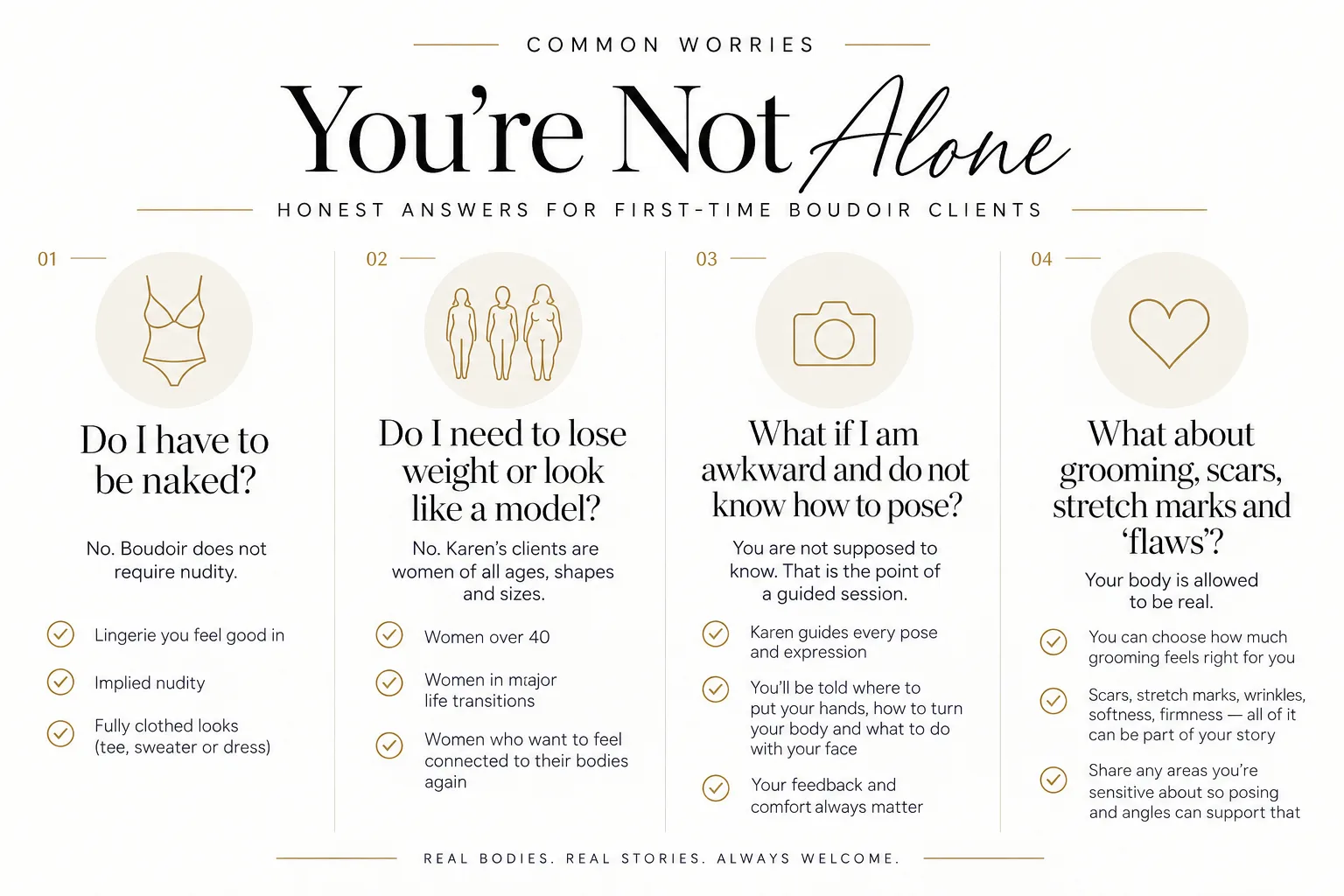
Common worries: Do I have to be naked, know how to pose, or look a certain way?
If you are like most first-time boudoir clients, a few specific fears are probably looping in your head. Let’s address them directly.
“Do I have to be naked?”
No. Boudoir does not require nudity.
The level of undress is always your choice and can stay within:
- Lingerie you feel good in.
- Implied nudity, where things are suggested but not shown.
- Fully clothed looks that still feel intimate or powerful, like a simple tee, sweater or dress.
This is something you talk through in planning and again on the day. You can also change your mind at any point. There is no pressure to “go farther” than you planned.
“Do I need to lose weight first or look like a model?”
No. Karen’s clients are women of all ages, shapes and sizes seeking to celebrate milestones or rediscover confidence in themselves. That includes women over 40, women in the middle of major life transitions, and women who simply want to feel connected to their bodies again.
You do not have to fix, shrink or smooth yourself into some imaginary ideal first. You come as you are, right now.
If you want to see how women in similar life stages have chosen to celebrate themselves, Karen shares more about this in her stories of boudoir over 40.
“What if I am awkward and do not know how to pose?”
You are not supposed to know. That is the point of a guided session.
Karen guides every pose and expression during the session, and posing is the photographer’s job, not the client’s. You will be told where to put your hands, how to turn your body and what to do with your face.
If something feels awkward, you can say so. Often the poses that feel strange actually look incredible on camera, but Karen will always adjust based on your feedback and comfort.
“What about grooming, scars, stretch marks and ‘flaws’?”
Your body is allowed to be real.
You can choose how much grooming feels right to you. If you want to shave or wax, you can, but you do not have to. If you prefer to keep body hair natural, that is also okay. You can bring this up during planning and get guidance that fits your comfort and preferences.
Scars, stretch marks, wrinkles, softness, firmness, all of it can be part of your story. You can share if there are areas you feel sensitive about so that posing and angles can support that.
How a boudoir session can change how you see yourself?
On the surface, boudoir is about photos. Underneath, it often becomes something more personal.
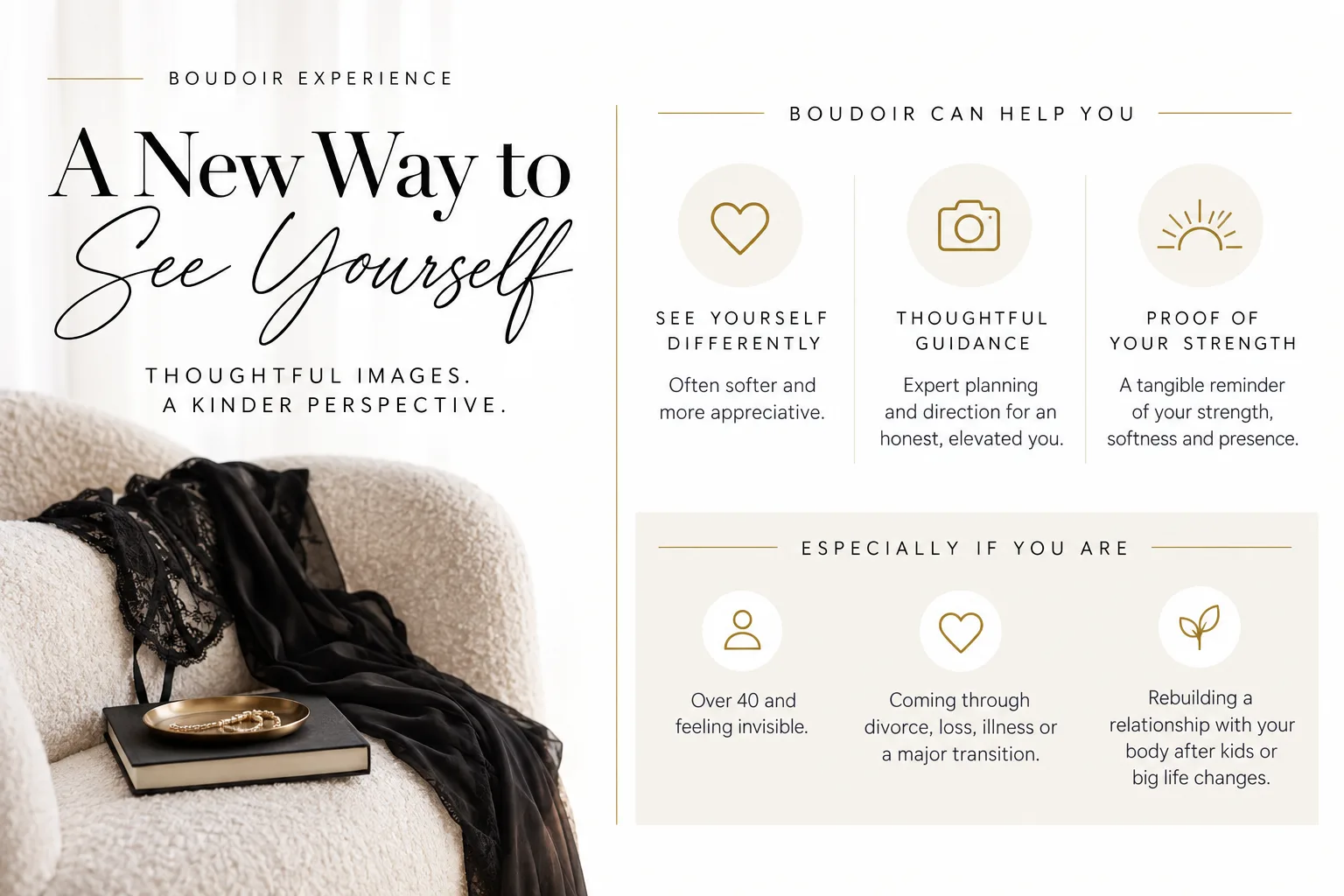
A well-supported boudoir experience helps many women see themselves with fresh eyes, often softer and more appreciative than their everyday self-talk. You are used to catching your reflection in harsh bathroom light or a quick phone snap and going straight to criticism. A thoughtfully lit, guided session gives you another way to see yourself.
Karen believes every woman deserves to see herself as strong, confident and beautiful. That belief shapes how she plans, directs and finishes your session, so the images feel like an honest, elevated version of you, not a stranger.
Especially if you are:
- Over 40 and feeling invisible.
- Coming through divorce, loss, illness or a major transition.
- Rebuilding a relationship with your body after kids or big life changes.
Seeing yourself thoughtfully photographed can be a way to mark that chapter. It is not magic, and it does not fix everything, but it can give you tangible proof of your own strength, softness and presence.
If you are still wondering if the experience itself is worth the nerves, you may find it helpful to read more about whether boudoir is worth it for women in Central Illinois.
FAQ: Quick answers about what happens at a boudoir session
What should I bring to my session?
Plan to bring:
- A few outfit options that fit the comfort level you decided on (lingerie, favorite clothes, personal items).
- Any accessories or meaningful pieces you want included.
- Basic undergarments even if you are planning implied or partial nudity, so you can layer as needed.
Karen provides guidance ahead of time through her Getting Ready Guide, so you will not be guessing alone.
Do I need to shave or wax before my session?
Grooming is your choice. Some women prefer to shave or wax, others keep body hair natural. There is no requirement either way. Choose what makes you feel most like yourself and most comfortable in your own skin.
How long does a boudoir session usually last?
Session length varies depending on the specific session type, how many outfits you use and how you prefer to move through the day. In general, you can expect time for:
- Arrival and settling in.
- Hair and makeup for full sessions.
- The actual photoshoot with outfit changes and breaks.
For exact timing based on the kind of experience you have in mind, it is best to ask directly when you inquire.
Will we talk about comfort level and privacy during the shoot, or only before?
There is always a conversation both before and during the shoot about comfort level, posing and privacy. You will:
- Talk about boundaries and preferences before the session.
- Revisit them when you arrive.
- Continue to check in throughout the shoot, with room to pause, change direction or say no.
Your comfort is not a one-time checkbox, it is part of the whole process.
How do I find out about pricing and packages?
Pricing and packages can change over time and may vary based on what you want from your session. The most accurate and current information will come directly from Karen Stauffer Photography. When you reach out, you can share what you are hoping for and get details that fit your situation.
Ready to experience this for yourself?
If you see yourself in these worries, and you also feel that small tug of curiosity, you do not have to decide everything today. You can start with a simple conversation.
Karen Stauffer Photography serves clients in Bloomington, Champaign, Peoria, Decatur and Springfield, Illinois. If you want a guided, respectful boudoir experience where you do not have to know how to pose or perform, you can reach out, ask your questions and see if it feels like the right fit.
When you are ready to talk about what a session could look like for you, you can claim your spot here: Claim your spot.